
Drowning in Data
How the Information Age Made Propaganda Easier Than Ever
The Promise of the Information Age
For most of modern history, ignorance was explained by scarcity. Books were rare. News traveled slowly. Education was limited to the privileged few. When the internet arrived, many believed humanity had finally solved this problem. Knowledge would no longer belong to elites or institutions. Information would be everywhere, instantly accessible to anyone with a screen.
The expectation seemed obvious. If people had unlimited access to information, they would naturally become more informed, more discerning, and more capable of resisting manipulation.
But history has unfolded in a far more complicated way.
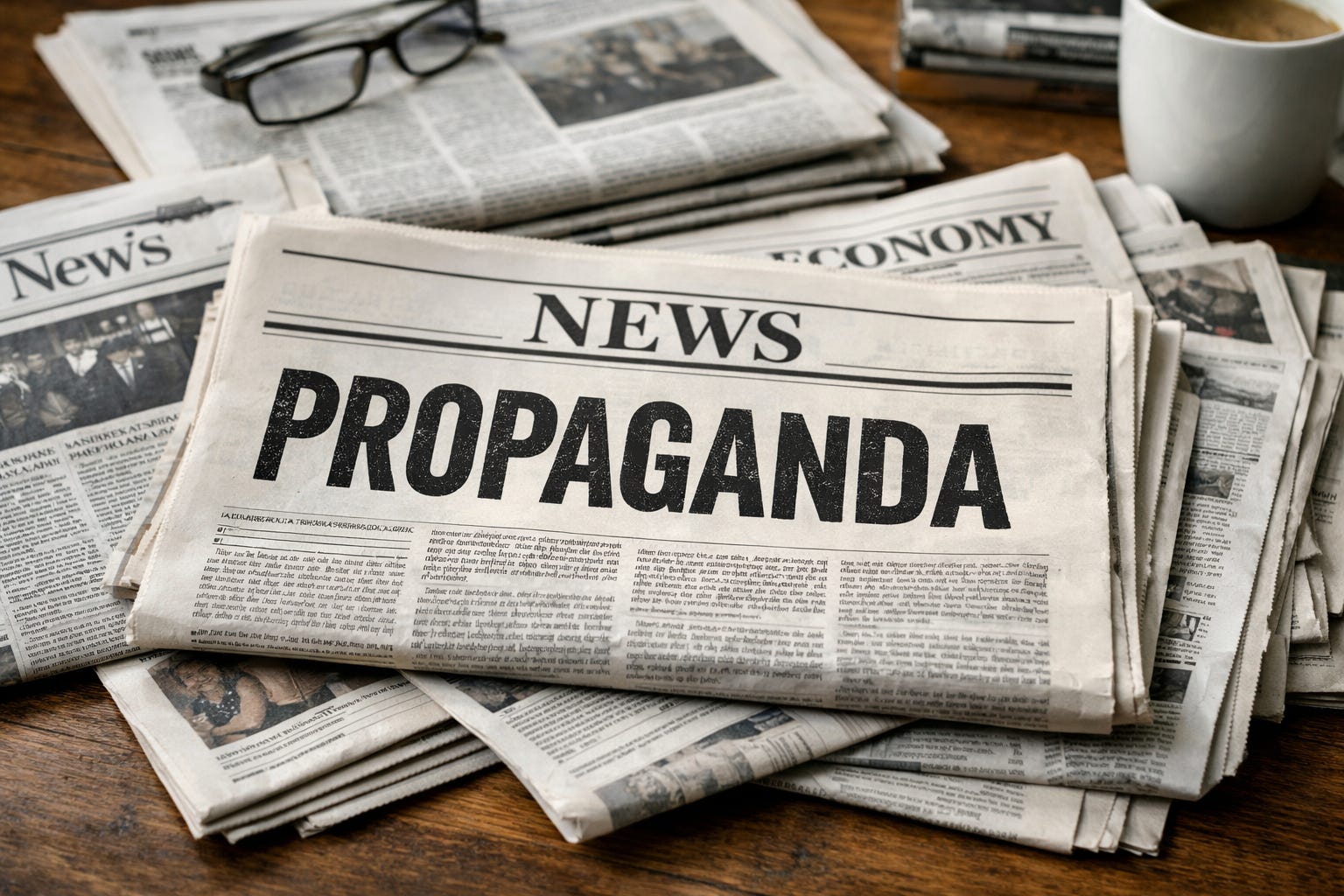
The digital revolution has not simply expanded knowledge. It has also created the most powerful propaganda environment humanity has ever seen. The same technologies that promised enlightenment have also made it easier than ever to confuse, manipulate, and divide the public.
We are not living in an age of ignorance because information is scarce. We are living in an age of confusion because information is overwhelming.
When Everyone Has a Megaphone
In earlier eras, propaganda required centralized power. Governments, state media, or large institutions controlled printing presses, radio broadcasts, or television networks. Influence flowed from the top down.
The internet shattered that structure. Today anyone can publish ideas instantly to a global audience. At first this seemed like a triumph of free speech. In many ways it still is. But it also created a new problem.
When everyone has a megaphone, the signal becomes buried beneath noise.
Millions of voices compete for attention at every moment. Headlines flash past faster than anyone can evaluate them. Claims, rumors, opinions, and facts mix together in a continuous stream. In such an environment, the information that spreads the fastest is rarely the most accurate. It is the most emotionally stimulating.
Fear spreads faster than nuance. Anger spreads faster than context. Outrage travels faster than truth.
The result is that misinformation no longer needs institutional backing to spread widely. The structure of the system itself amplifies it.
The Psychology of Manipulation
Human beings like to believe that more information makes them harder to deceive. In reality, the opposite is often true.
The human brain evolved to process relatively small amounts of information within tight social communities. Our cognitive instincts are built for tribal environments, not global networks of endless data.
When people encounter overwhelming streams of information, they rely on mental shortcuts. Psychologists call these heuristics. We trust information that confirms our existing beliefs. We trust information that is repeated often. We trust information shared by people we identify with.
These instincts were useful in small communities. In the digital age they are easily exploited.
Propaganda no longer requires carefully crafted ideological campaigns. It only requires the strategic activation of human biases. If a message triggers identity, fear, or moral outrage, people will spread it voluntarily.
In the modern information ecosystem, citizens often become the distributors of the very propaganda that manipulates them.
The Rise of the Algorithmic Gatekeeper
Many people believe that social media simply reflects what society already thinks. In reality, digital platforms shape what people see through algorithmic curation.
Social media platforms are not neutral public squares. They are engagement machines. Their algorithms are designed to maximize the amount of time users spend on the platform.
Content that provokes strong emotional reactions tends to generate the most engagement. As a result, algorithms quietly elevate the most polarizing and sensational material.
Moderate voices are less likely to spread. Nuanced arguments rarely go viral. Calm discussion cannot compete with outrage.
Over time this creates a distorted information environment where extreme views appear more common than they actually are. People begin to believe society is more divided and hostile than it truly is.
Propaganda thrives in precisely this kind of atmosphere.
The Disappearance of Shared Reality
A healthy society requires some level of shared understanding. Citizens may disagree about policy or ideology, but they generally operate from the same basic set of facts.
The digital information environment has fractured that shared reality.
Instead of a common informational landscape, individuals now inhabit personalized information bubbles. Algorithms feed users content similar to what they have previously engaged with. Over time these patterns create ideological echo chambers.
Inside these digital communities, certain narratives are repeated constantly. Alternative viewpoints rarely appear. Opposing information is dismissed as malicious or false.
Two people can live in the same country, witness the same event, and emerge with entirely different interpretations of reality.
This fragmentation does not merely produce disagreement. It produces mutual distrust. Citizens begin to see one another not as neighbors with different views, but as enemies living in separate informational worlds.
A society that cannot agree on basic facts becomes vulnerable to manipulation from every direction.
The Velocity of Modern Propaganda
Traditional propaganda moved slowly. Newspapers required printing. Television required broadcast infrastructure. Messages had to pass through editorial gatekeepers.
Digital propaganda moves at the speed of emotion.
A single misleading post can reach millions within minutes. A manipulated video can circulate globally before anyone verifies its authenticity. False narratives can become widely accepted before corrections ever appear.
Even when misinformation is eventually debunked, the damage often remains. Psychologists have shown that first impressions strongly shape belief formation. Once a narrative enters public consciousness, corrections rarely erase it completely.
The lie travels at digital speed. The truth arrives later on foot.
The Attention Crisis
Underlying all of these dynamics is a deeper cultural shift. The modern world has not merely increased the amount of information available. It has fractured human attention.
Smartphones deliver a constant stream of alerts, headlines, messages, and updates. Each notification pulls the mind away from sustained reflection. Over time this creates a habit of rapid information consumption without deep evaluation.
Propaganda thrives in environments where people react quickly but think slowly.
Critical thinking requires time. It requires stepping back from emotional reactions, examining evidence, and considering alternative explanations. The architecture of modern digital life discourages this process.
In the attention economy, the most valuable commodity is not truth. It is engagement.
And engagement often favors the loudest, most provocative voices.
The Irony of Infinite Information
The great irony of the information age is that knowledge has never been more accessible. At any moment a person can access libraries of human history, scientific research, and philosophical wisdom with a device in their pocket.
Yet access alone does not create understanding.
Information can educate. It can also overwhelm. Without discipline, discernment, and intellectual humility, a flood of information becomes indistinguishable from noise.
In such an environment people often retreat into the comfort of simple narratives. Complex realities are reduced to slogans. Nuanced debates collapse into tribal conflicts.
The abundance of data does not guarantee wisdom. In many cases it creates the illusion of knowledge while weakening the habits that produce real understanding.
Reclaiming Discernment
The solution to this problem is not censorship or technological retreat. Free societies depend on open exchange of ideas. But freedom also requires responsibility.
Citizens of the digital age must learn to cultivate discernment. That means slowing down before sharing information. It means questioning emotionally satisfying narratives. It means reading beyond headlines and seeking original sources.
Most importantly, it means rediscovering the discipline of thinking.
Propaganda has always existed. What has changed is the scale and speed at which it operates. In an age of endless information, the most important skill is not access to data. It is the ability to distinguish truth from noise.
The internet promised a more informed civilization. Whether that promise is fulfilled will depend less on our technology and more on our character.
Because information alone cannot protect a society from manipulation. Only wisdom can.
“Access to information does not guarantee freedom from deception. A people who abandon discernment will eventually mistake noise for truth.” — Alma Ohene-Opare


