
One Nation, Under God
Why the Pledge of Allegiance Still Matters
There are moments in the life of a nation when small decisions reveal large truths. A vote here, a policy change there, and suddenly the ground beneath our shared identity begins to shift. I recently watched a video of a Virginia commission voting to remove the Pledge of Allegiance from their meeting agendas. Some will say it is trivial. Some will call it procedural housekeeping. I call it a warning sign.
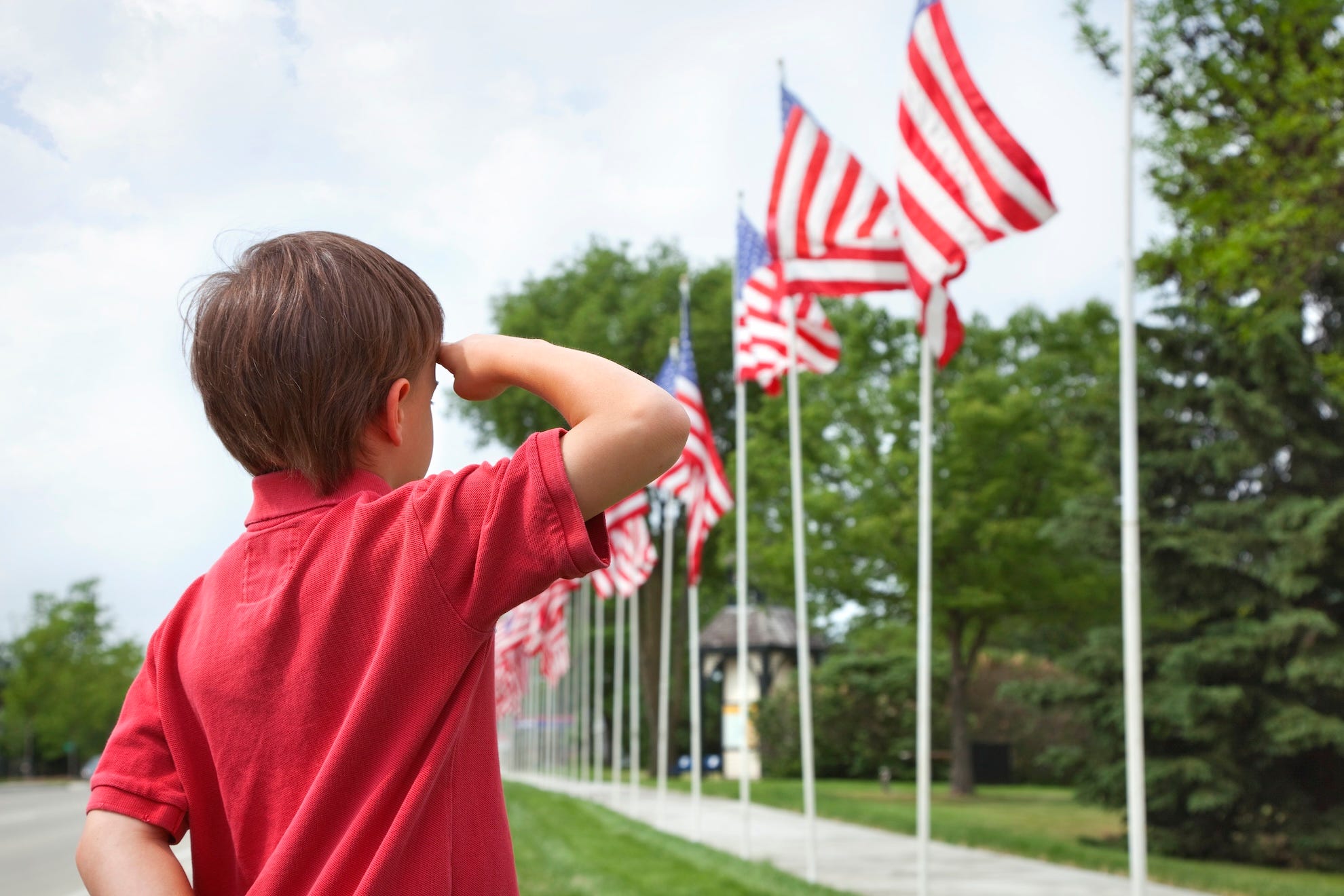
A nation is not held together by roads and bridges alone. It is held together by symbols, shared rituals, and common confessions. The Pledge of Allegiance is one of those confessions. When we stand, place our hands over our hearts, and declare our allegiance to one nation under God, indivisible, with liberty and justice for all, we are not engaging in blind patriotism. We are reaffirming a covenant.
And covenants matter.
Symbols as the Soul of a People
A flag is cloth. A pledge is words. But meaning transforms material into memory. Meaning transforms words into witness. Symbols are like the roots of a great oak. You do not see them every day, yet they anchor the tree against the storm.
The Pledge of Allegiance is not about endorsing every policy or politician. It is about affirming the ideals that transcend administrations. It is about loyalty to the republic, not to a ruler. It is about faith in the promise of America, even when the practice falls short.
When a governing body removes the pledge from its agenda, it is not simply shortening a meeting. It is signaling that our shared confession is no longer necessary. It is saying that the ritual that binds us is optional. But when unity becomes optional, fragmentation becomes inevitable.
Scripture reminds us that a house divided against itself cannot stand. That truth is not confined to church walls. It applies to republics as well.
The Data We Cannot Ignore
This is not merely anecdotal concern. It is measurable.
According to polling from Gallup, American pride has fluctuated sharply along partisan lines. In recent surveys, only about 36 percent of Democrats said they are extremely proud to be American. In contrast, approximately 90 percent of Republicans consistently report that they are extremely or very proud to be American. The pattern is telling. When liberals hold political power, their pride in America rises. When they lose power, their pride declines significantly. Conservative pride remains high and steady regardless of who occupies the White House.
These numbers are not just statistics. They are a mirror. They reflect a troubling reality that for many on the left, national pride appears contingent on political control. Patriotism becomes conditional. Love of country becomes transactional.
But love that is conditional is not love. It is leverage.
A nation cannot endure if nearly half its political spectrum ties its pride in the country to partisan victory. Patriotism must be deeper than party. It must be rooted in principle.
When pride in country drops to 36 percent among a major political faction, we are not witnessing healthy debate. We are witnessing erosion. We are watching the soil of national cohesion thin beneath our feet.
Freedom Versus Antipathy
Every society stands at a crossroads between gratitude and grievance. Gratitude says, I will improve what I have inherited. Grievance says, I will burn it down because it is imperfect.
In recent years we have seen American flags desecrated and burned at protests. We have heard rhetoric that sides more comfortably with foreign ideologies than with our own founding creed. We have watched as unifying symbols are recast as oppressive artifacts.
This is not healthy dissent. Dissent is as American as the Boston Tea Party. But there is a difference between reforming a house and rooting for its collapse. There is a difference between criticism and contempt.
How can a country survive when its citizens openly root for its downfall? How can a republic thrive when segments of its population rhetorically align with its adversaries and embrace ideas fundamentally at odds with our founding principles of limited government, individual liberty, and inalienable rights endowed by our Creator?
Freedom is fragile. It requires affection. It requires loyalty. It requires a people who believe their country is worth defending, even when it needs correcting.
The Pledge of Allegiance is one small but powerful antidote to antipathy. It reminds us that we belong to something larger than our grievances. It anchors us to a shared heritage built on sacrifice.
An Immigrant’s Gratitude
As an immigrant, this concerns me deeply.
I chose this country. I was not born into it. I came because I saw in America a beacon. I saw opportunity, ordered liberty, and a moral vision rooted in natural law. I saw a nation that, though imperfect, aspired to justice under God.
When I stand for the pledge, I do so with gratitude. I think of the soldiers who bled for freedom. I think of the abolitionists who called the nation back to its creed. I think of the civil rights leaders who demanded that America live up to its promise. They did not reject the founding ideals. They appealed to them.
The pledge connects us to that lineage. It reminds us that we are stewards of a legacy we did not create but are called to preserve.
To discard such symbols is to untether a generation from its inheritance. It is to tell our children that the story of America is not worth reciting. It is to sever the thread that binds past, present, and future.
A people without memory is a people without direction. Like a GPS without coordinates, we drift.
The Deeper Battle
The debate over the pledge is not about ten seconds at the beginning of a meeting. It is about whether we still believe in the idea of America.
Do we believe that rights come from God, not government? Do we believe that liberty requires virtue? Do we believe that unity requires shared commitments?
Or do we believe that America is merely a power structure to be dismantled?
There is a spiritual dimension to this struggle. The phrase under God in the pledge is not incidental. It acknowledges that our freedom is grounded in a higher authority. Remove God, and rights become negotiable. Remove shared symbols, and identity becomes fragmented.
We must be vigilant. Not fearful, but vigilant. Optimism does not mean naivety. It means confidence that truth, when courageously proclaimed, can prevail.
A Call to Courageous Unity
What then shall we do?
First, we must refuse to treat unifying symbols as trivial. Speak up in local meetings. Write letters. Engage respectfully but firmly. Encourage your children’s schools and community boards to maintain traditions that reinforce unity.
Second, we must model patriotism that is thoughtful and principled. Patriotism is not blind. It is discerning. It holds leaders accountable while honoring the nation’s ideals.
Third, we must teach history honestly but faithfully. Tell the full story of America, its sins and its triumphs, always returning to the central truth that this nation was founded on a revolutionary idea that all men are created equal and endowed by their Creator with certain unalienable rights.
Fourth, we must pray. A nation under God must not forget God.
As we approach the 250th anniversary of our founding, we stand at a pivotal moment. Will we enter that celebration fragmented and cynical, or unified and grateful? Will we treat our symbols as relics to discard, or as treasures to steward?
The road ahead is not predetermined. It is chosen. We can choose unity over division. We can choose gratitude over grievance. We can choose to stand, hand over heart, and declare that despite our differences, we are one nation, indivisible.
The pledge is not about blind allegiance to power. It is about faithful allegiance to principle. It is about remembering who we are so we do not forget where we are going.
Let us not be the generation that let the roots wither. Let us be the generation that watered them.
The oak still stands. The storm still rages. The question is whether we will remain anchored.
“One nation under God is not a slogan. It is a covenant. And covenants, when honored, hold a people together.” — Alma Ohene-Opare


Most of us feel this way. Yet in 1972, I think it was, we were not forced to stand for the pledge in schools anymore and someone in my class sat. I was horrified that she didn't care for her country, the flag, the pledge. Thank you for your story and words, may God have mercy.
So clearly articulated. What a beautiful strong message. ❤️🇺🇸🙏